

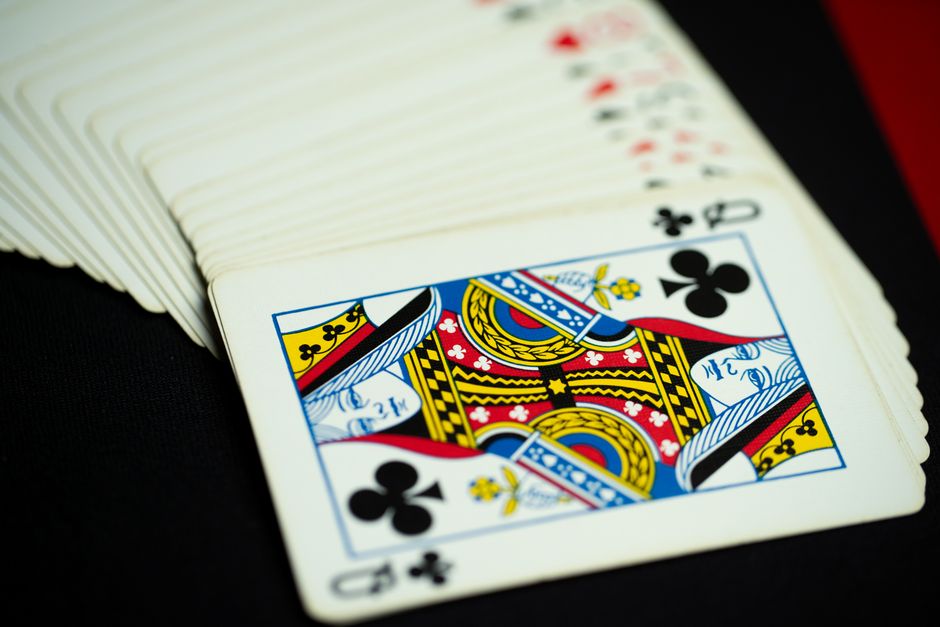
Every gambler remembers their first big win. The rush, the adrenaline, the irrational certainty that you've cracked the code. What almost nobody remembers is the quiet, unglamorous math that determines whether that win ever happens again. After a decade writing about iGaming and watching friends swing between euphoria and despair, I've noticed something: the players who stick around without losing their shirts aren't luckier. They just understand a handful of things the rest of us learn the hard way.
House Edge Is Not a Suggestion
Ask a casual player what the casino's advantage is on a slot machine and you'll usually get a shrug or a guess around "a few percent." On a typical 3-reel or 5-reel video slot, the house edge often sits between 2% and 8%, and the actual number varies wildly by game. That might sound trivial until you run the numbers over a few hundred spins.
Compare that to other formats and the gap becomes obvious. A standard roulette wheel with a single zero (European style) carries a 2.7% house edge. The American double-zero version jumps to 5.26% for almost identical gameplay. Blackjack played with near-perfect basic strategy can get the house edge under 1%, which is why serious players treat blackjack as a skill game wearing a casino uniform.
This isn't a reason to avoid slots. It's a reason to stop treating them like an ATM. The edge is baked into every spin, win or lose. Your only real control is how many spins you take.
RTP, Volatility, and Why Your Favorite Slot Feels Rigged
Return to Player (RTP) tells you what percentage of all wagered money a slot pays back over millions of spins. A 96% RTP game returns $96 for every $100 staked on average. The catch is that "on average" might mean after ten million spins, which is roughly nine million more than you'll ever play.
Volatility matters just as much, and it's the part most players ignore:
- Low volatility: frequent small wins, slower bankroll drain, less excitement.
- Medium volatility: a balanced mix, suited to players without strong preferences.
- High volatility: long dry spells punctuated by large payouts, brutal on small bankrolls.
A high-volatility slot with a 96.5% RTP can absolutely lose you $200 in twenty minutes on a $1 bet. Nothing is broken. You've just met the variance curve face to face. If your bankroll is $50, high-volatility games aren't a strategy, they're a countdown.
Betting Markets: Where Sharps Actually Live
Sports betting gets a reputation as the smart gambler's game, and there's truth to it. Closing line value, steam moves, and line shopping separate profitable bettors from the rest. But the margin between the two groups is thin and unforgiving.
Consider a standard -110 spread bet. You risk $110 to win $100, implied odds of about 52.4%. To break even long term, you need to win 52.4% of those bets. Most recreational bettors hover near 50% against the spread, which is the entire point of the market's design. Only bettors who consistently beat the closing line by a meaningful margin survive.
A few practical habits separate the two camps: See สล็อต for a side-by-side comparison.
- Shop at multiple sportsbooks; a half-point of line value compounds over hundreds of bets.
- Track every wager, not just the wins, because memory is a terrible accountant.
- Avoid parlay addiction; correlated long-shot bets are lottery tickets with better marketing.
- Focus on one or two leagues you actually understand instead of betting everything that moves.
Poker Is the One Game Where Skill Genuinely Wins
Unlike slots or roulette, poker pits you against other players, not the house. The rake takes a cut, sure, but a skilled player can beat the rake over tens of thousands of hands. That's why poker remains the most intellectually honest form of gambling in the iGaming world.
The 2020s online poker scene is brutal, though. Solvers have made GTO (game theory optimal) play accessible to anyone willing to study, which means the recreational player's edge has shrunk dramatically. Today's winning micro-stakes player needs to understand:
- Position: acting last gives you information and control on every street.
- Bankroll management: 20 buy-ins is a starting point, not a target for aggressive shots.
- Player profiling: exploitative play against predictable opponents beats solver-perfect play that nobody at the table appreciates.
Tournament poker adds another variable: variance that can keep a world-class player in the red for months. Cash games pay the bills; tournaments buy lottery tickets with skill attached.
The Practical Checklist Nobody Gives You
After watching hundreds of players cycle through the same mistakes, here's what actually helps:
- Set a session loss limit before you log in, and treat it as a hard stop, not a suggestion.
- Use bonuses carefully; wagering requirements of 35x or more often make "free money" a trap.
- Check your game's specific RTP because operators sometimes offer lower-return versions.
- Take breaks on a timer; fatigue is the single biggest bankroll killer in late-night sessions.
- Never chase losses with bigger bets; that's how a bad night becomes a bad month.
Looking Forward: Why the Numbers Don't Change
Live dealer games, crypto casinos, crash games, and AI-generated slots all feel like a new frontier, and in some ways they are. Yet the underlying math is more stable than the technology. House edges stay stubbornly positive because they have to. Variance still punishes impatience. Skill still rewards study.
What's actually shifted is accessibility. You can now lose a month's entertainment budget in eleven minutes from your phone, or make a smart, tracked, disciplined decision in the same eleven minutes. The iGaming industry doesn't hide the math. It just doesn't shout it either.
The players I respect most aren't the ones who hit a six-figure jackpot. They're the ones who set a number, stayed inside it, and walked away when the session ended. They treat casino games as entertainment with a cost, not an income stream waiting to be unlocked. That mindset, more than any betting system or hot streak, is the closest thing to an edge the average person will ever find.


Coding is used in almost all aspects of life and work now, be it directly or indirectly. It’s not just for companies in the tech sector. “An increasing number of businesses rely on computer code,
Coding is used in almost all aspects of life and work now, be it directly or indirectly. It’s not just for companies in the tech sector. “An increasing number of businesses rely on computer code,
Coding is used in almost all aspects of life and work now, be it directly or indirectly. It’s not just for companies in the tech sector. “An increasing number of businesses rely on computer code,