

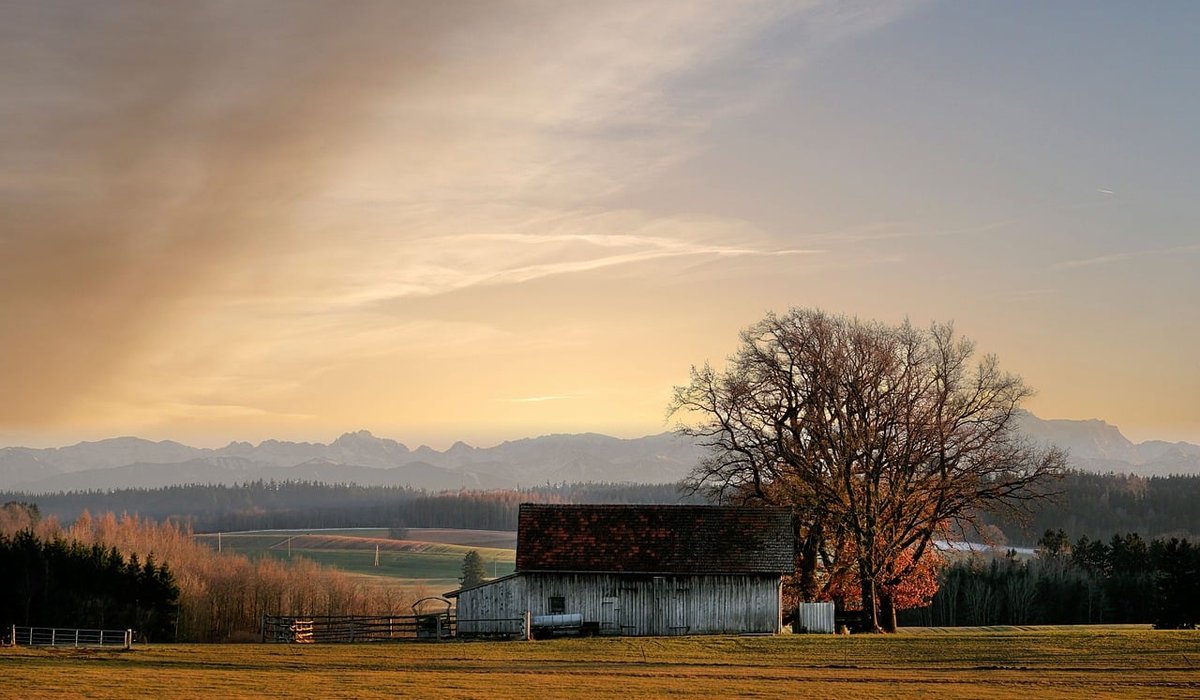
A barn conversion gives you something no new-build can: volume, character and a genuine sense of place. It also gives you crooked walls, beams in awkward places and a floor that slopes for reasons a builder will explain at length. Designing a rustic kitchen here is a balancing act — you want the warmth of farmhouse style, but you also want an oven that heats evenly and a dishwasher that fits under a worktop that has never been level in its life. The good news is that the two are entirely compatible, provided you plan the practicalities before you fall in love with a particular shade of sage green.
Work with the Building, Not Against It
Before you choose a single cabinet, measure everything — twice. In a barn, the difference between the narrowest and widest point of a room can be 150mm or more, and walls are rarely plumb. That matters because most kitchen units are made to square tolerances. A good fitter will scribe end panels and build out frames where needed, but you need to budget for it.
Exposed beams are the other constraint. They often rule out wall units along one side of the room, which is no bad thing. Instead, consider a low run of base cabinets with open shelving above, or a freestanding dresser that can be positioned where a beam allows. If the barn is listed, or sits within a curtilage of a listed building, you may need Listed Building Consent before altering internal layouts, inserting flues or adding roof lights. Speak to your local conservation officer early; they are usually far more helpful when consulted at the sketch stage than after the work has started.
Layouts That Suit a Long, Open Room
Barn interiors tend to be long and narrow, which makes a single galley feel cramped and a giant island feel adrift. The most reliable solution is a broken-plan arrangement: a main run along one wall, a generous island or peninsula parallel to it, and a separate zone tucked into an alcove or corner.
- The working triangle still matters. Keep sink, cooking and refrigeration within a few paces of each other, even if the room extends far beyond them.
- Anchor the island. In a room with high ceilings, a freestanding island can look lost. Give it weight with a deeper worktop, a sturdy end panel or a pair of stools.
- Allow for circulation. Aim for at least 1,000mm between island and run in a family kitchen, more if two people cook at once.
- Use the ends. The gable ends of a barn are ideal for a tall pantry cupboard, a larder fridge or a boot-and-coat bench.
Surfaces That Earn Their Keep
Rustic does not mean fragile. In a busy rural household with dogs, wellies and children, choose materials that improve with age rather than ones that show every mark.
- Worktops. Oak or ash looks glorious but needs oiling several times a year and dislikes standing water. A practical compromise is timber around the sink-free areas and quartz or a dark granite beside the hob and sink.
- Floors. Flagstone, limestone and quarry tiles are the classic barn choices and pair beautifully with underfloor heating. Seal porous stone properly and keep a mat by the door — grit is the enemy of a polished finish.
- Splashbacks. A simple upstand plus a washable painted wall in a hard-wearing eggshell is often more in keeping than a full tiled wall. Where you do tile, brick-shaped or handmade-look tiles in a chalky white or clay tone work well.
- Walls. If the barn has lime plaster or solid stone walls, keep them breathable. Sealing them with modern plastic paints can trap moisture and cause problems later.
Hiding the Technology Without Hiding the Convenience
This is where rustic kitchens most often go wrong — either the appliances dominate the room, or they are hidden so thoroughly that everyday cooking becomes a chore.
A range cooker suits a barn beautifully and gives you presence as well as capacity. If you prefer the control of induction, look for a model with a stainless or black finish and frame it within a chimney-style surround or a deep mantel to soften the look. A downdraft or integrated extractor keeps sightlines clear, though extraction through a solid stone wall needs planning and a suitably sized duct.
For everything else, integrated is your friend:
- Dishwashers and under-counter fridges disappear behind furniture-style doors with simple handles.
- A boiling-water tap removes the kettle from the worktop entirely.
- A tall larder cupboard can house a microwave, coffee machine and toaster behind closed doors, with a power socket inside.
- Drawer-style bins, pull-out larders and deep pan drawers keep clutter out of sight without compromising on storage.
Heating, Water and Other Rural Realities
Rural properties bring their own considerations. If you are on oil or LPG, check what your range cooker needs and whether you have capacity. If your water is hard, allow for a softener or plan for regular descaling — it will noticeably extend the life of kettles, coffee machines and steam ovens. Off the mains gas grid, an electric or induction hob plus a separate oven is often the simplest, most controllable setup.
Insulation and draughts matter too. A barn with a vast open ceiling can feel cold underfoot, so underfloor heating in the kitchen zone is worth the investment. Pair it with a well-insulated roof and you will find the room usable year-round rather than just in summer.
Lighting and the Finishing Touches
Layer your lighting: pendants over the island on dimmers, task lighting under wall cabinets, and a couple of warm lamps on a dresser or shelf. Avoid a single row of downlights, which flattens the character of beams and stonework.
Finally, resist the urge to fill every surface. In a barn, a few well-chosen pieces — a scrubbed pine table, a row of hooks, a bowl of eggs, a well-worn chopping board — do more for atmosphere than any amount of themed accessories. Aim for a kitchen that looks like it has always been there, but works like it was built last year.


Coding is used in almost all aspects of life and work now, be it directly or indirectly. It’s not just for companies in the tech sector. “An increasing number of businesses rely on computer code,
Coding is used in almost all aspects of life and work now, be it directly or indirectly. It’s not just for companies in the tech sector. “An increasing number of businesses rely on computer code,
Coding is used in almost all aspects of life and work now, be it directly or indirectly. It’s not just for companies in the tech sector. “An increasing number of businesses rely on computer code,