

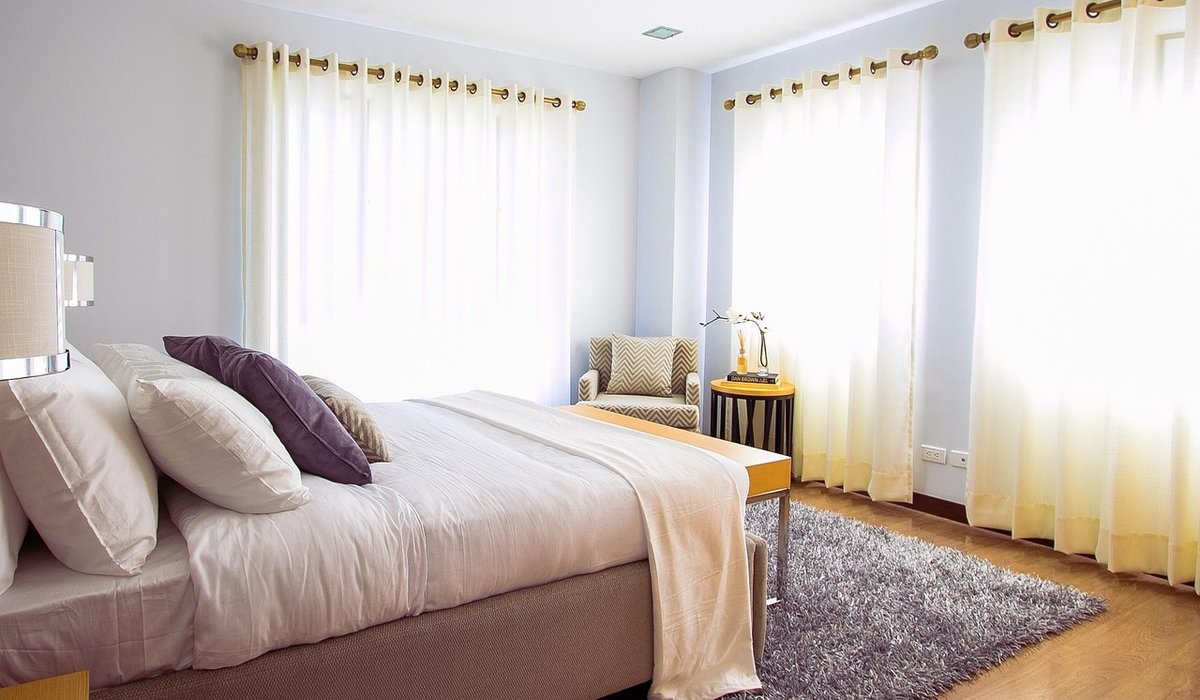
A farmhouse kitchen should be the room everyone drifts into — boots kicked off by the door, kettle on, someone leaning against the range while supper bubbles away. But barn conversions bring their own challenges: soaring ceilings, stone or brick walls, flagstone floors and big open-plan volumes that swallow heat and light alike. The good news is that most of what makes a kitchen feel genuinely warm has little to do with turning the thermostat up. A few thoughtful adjustments will keep the heart of your home cosy from October through to March.
Understand How a Barn Kitchen Loses Heat
Before you buy a single cushion, work out where the cold is actually coming from. In a converted barn, heat rarely escapes through the walls — it stratifies upwards into the roof space and seeps in around the edges. The usual culprits are unsealed beam pockets, gaps beneath uneven skirting boards, single-glazed or poorly fitted external doors, and old wall vents left over from when the building housed livestock.
Choose a windy day and walk the room with the back of your hand held close to skirting level, door frames and window reveals. A lit incense stick works even better: the smoke will wobble towards any draught. Make a list. You will almost certainly find that the discomfort comes from three or four specific points rather than the whole room, which makes the fixes far cheaper than you might fear.
Seal the Gaps Without Suffocating the Building
Traditional agricultural buildings were designed to breathe. If yours has stone, cob or brick walls pointed with lime mortar, sealing it completely can trap moisture and cause damp — the opposite of cosy. So be selective.
- Fit brush or foam seals to external doors, and add a keyhole cover and letterbox brush if the door is used regularly.
- Use sheep's wool or hemp draught excluders at thresholds rather than plastic ones; they last longer and suit the building.
- Block an unused chimney with a chimney balloon or a rolled wool excluder. An open flue can pull out as much heat as a small radiator provides.
- Check extractor fans for shutters that no longer close, and fit a cowled cover if the wind whistles through.
- Leave trickle vents and breathable walls alone. Ventilation matters, particularly in a kitchen.
Layer the Lighting for Long Evenings
Nothing makes a room feel colder than a single cool-white downlight glaring off a hard floor. Aim for three layers instead. Ambient light comes from pendants or wall lights on a dimmer. Task light sits over the island, the sink and the worktops — under-cabinet strips are ideal because they light the surface, not the ceiling. Then add the layer that actually creates atmosphere: a small lamp on the dresser, a picture light over a framed print, a floor lamp beside an armchair.
Stick to warm bulbs around 2700K throughout, and put everything on dimmers or smart plugs so you can drop the level as the evening draws in. Brass, aged metal and ceramic shades bounce light softly, whilst bare glass pendants send it straight up into a void. In a room with a high ceiling, wall lights and table lamps do far more for comfort than ceiling fittings ever will.
Dress Floors and Windows in Natural Textiles
Flagstones and quarry tiles are beautiful and freezing. Wool, jute, linen and cotton are the materials that make a farmhouse kitchen feel settled — and they insulate as well as soften.
- Layer rugs: a large jute or sisal base with a washable wool rug on top, especially in front of the range and sink.
- Hang curtains on a ceiling-mounted track well above the window, so the fabric covers the reveal rather than sitting inside it. Lined and interlined curtains cut far more heat loss than a blind alone.
- Let curtains fall to just brush the floor, and consider a heavy door curtain across a draughty back entrance.
- Add sheepskin over bench seats, linen cushions on a settle, and a couple of throws within arm's reach of the table.
Arrange the Room Around Warmth and Company
In an open-plan barn, where you put things matters as much as what you put there. Keep the seating zone at the warmest end, close to the range or woodburner, and pull the table in near it. A bench along one side with storage underneath gives you somewhere to tuck away boots and baskets, and encourages people to linger.
Position chairs so nobody sits in the path between the door and the cooker — a seat in a walkway is always a cold seat. If the space is very long, a heavy curtain, a glazed screen or a tall dresser can break it into zones and stop heat drifting off into an unused end. A small chair or stool by the worktop, angled towards the cooking area, gives a guest somewhere to perch with a glass of wine whilst you finish supper.
Everyday Habits That Keep the Chill Off
Once the structure is sorted, small routines carry the rest. Keep lids on pans, use residual oven heat to warm plates, and let the kettle or a simmering pan of spices add gentle humidity — dry air feels noticeably colder than damp air. A ceiling-mounted pulley dryer does the same job and saves a fortune on tumble drying.
Close doors to utility rooms, pantries and corridors, and shut off the coldest end of the room in the evenings if you are not using it. Finally, embrace the farmhouse rhythm: bread proving near the range, a hot water bottle tucked into a chair, candles lit before the sun has quite gone. A warm kitchen is not simply one with the heating on. It is one that is used, layered and lived in — and that is something no amount of insulation can imitate.


Coding is used in almost all aspects of life and work now, be it directly or indirectly. It’s not just for companies in the tech sector. “An increasing number of businesses rely on computer code,
Coding is used in almost all aspects of life and work now, be it directly or indirectly. It’s not just for companies in the tech sector. “An increasing number of businesses rely on computer code,
Coding is used in almost all aspects of life and work now, be it directly or indirectly. It’s not just for companies in the tech sector. “An increasing number of businesses rely on computer code,