

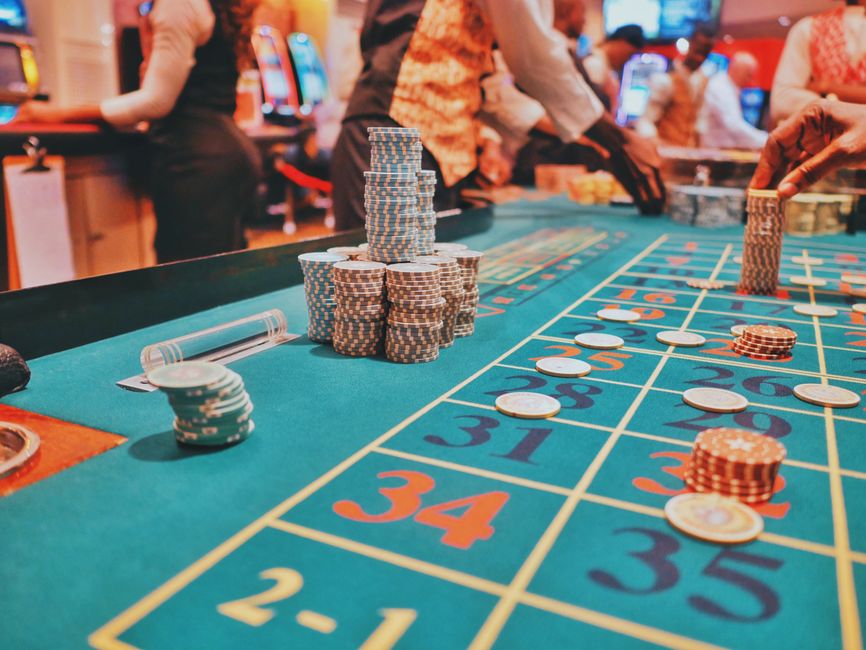
Ask ten gamblers what separates a winning session from a losing one and you'll get ten different answers. Ask anyone who actually tracks their results over a few thousand hands, spins, or bets, and the answer usually narrows down to something less romantic: a blend of math, psychology, and discipline. The iGaming world — casinos, sportsbooks, poker rooms, slot floors — looks like one big ecosystem from the outside, but the mechanics inside each vertical couldn't be more different. Some are pure chance dressed up in flashy graphics. Others are legitimate skill games where a strong player can reliably beat weaker opposition. Confusing the two is where most people lose their money.
Let's break down what's actually happening when you click "spin," cash out a bet, or raise on the river, and how to approach each format with a clearer head.
The House Edge Is Not a Plot — It's a Tax
Every casino game has a built-in mathematical advantage for the operator. That's not rigging; it's the business model. The size of that edge varies wildly, and understanding it is the single most useful thing a casual player can learn.
- Blackjack (basic strategy): roughly 0.5% house edge
- Baccarat (banker bet): about 1.06%
- European roulette: 2.7%
- American roulette: 5.26% (that extra double-zero is brutal)
- Online slots: typically 2% to 8%, depending on RTP
- Keno and lottery-style games: often 20% to 35%
Two players with the same bankroll and the same number of bets will have radically different expected outcomes depending on which game they choose. A player grinding 3,000 hands of blackjack with basic strategy is in a very different position than someone running 3,000 spins on a 92% RTP slot. Neither is guaranteed to win, but the leak rate is dramatically different. If you're going to play chance-based games, at least pick the ones that bleed slowly.
One more detail worth knowing: RTP (return to player) is a long-run figure. A slot with 96% RTP does not return 96 cents for every dollar you put in during a session. It's an average calculated over millions of spins. In any given hour, variance can swing you 400% up or down. Understanding this prevents the classic mistake of chasing losses because "the machine is due." It isn't. Every spin is independent. Some of the clearest guidance on this comes from สล็อต.
Sports Betting: Where the Line Is the Whole Game
Unlike slots, sports betting gives you something to analyze — and a way to actually be right. The bookmaker's margin (the "vig" or "juice") typically sits between 2% and 8% depending on the market and how sharp the book is. Beating that margin consistently is hard, but not impossible, and it's the reason sharp bettors exist.
A few practical realities:
- Closing lines are efficient. The final price before kickoff reflects the collective wisdom of the market. If you're consistently beating the closing line, you're probably a long-term winner. If you're not, you're probably paying the tax.
- Line shopping matters more than picks. Getting -105 instead of -110 on the same bet moves your long-term ROI by several percentage points. Over 500 bets a year, that's real money.
- Prop markets are softer than main lines. Player props, alternate spreads, and niche leagues often carry more margin for sharp bettors because books can't dedicate the same modeling resources to every market.
The trap for new bettors is treating sports betting like a lottery ticket with extra steps. It's not. It's a forecasting exercise with a fee attached. If you can't articulate why you think a line is wrong, you're just guessing with a vig equivalent of 5% on every call.
Poker Is the Only Vertical Where You Can Beat the Rake
Poker is different. Instead of playing against the house, you're playing against other people, and the operator takes a cut — the rake — from each pot. Typically 2.5% to 5%, capped at a few dollars depending on stakes. If you're consistently better than your opponents by more than the rake, you win long-term. If you're not, the rake will grind you down no matter how many "bad beats" you blame on luck.
Realistic win rates tell the story. A strong cash game player at mid-stakes might earn 3 to 8 big blinds per 100 hands. A tournament grinder's ROI sits somewhere between 10% and 30% depending on field size and buy-in level. Those numbers look small until you stack thousands of hands and realize the difference between a break-even player and a 5bb/100 winner is often just one or two leaks — playing too many hands preflop, calling too much on the river, or failing to adjust to table dynamics.
What makes poker special is that you can literally be the best player at the table and still lose tonight. But you can also be the best player at the table and win across a year. That distinction — session vs. sample — is what separates poker from virtually every other iGaming format.
Slots, Streamers, and the Illusion of Skill
Slot content has exploded online. Twitch and YouTube are full of streamers hitting massive multipliers on bonus buys, and it's easy to walk away thinking there's a skill to it. There isn't. Slot mechanics are governed by a certified random number generator and a paytable you can look up before you spin. The only "decisions" are stake size and whether to buy a bonus feature. Everything else is math dressed up in animations.
That doesn't make slots bad. It makes them entertainment. The trick is sizing your bankroll so a normal session — say, 200 to 500 spins on a mid-volatility slot — doesn't wreck you. A common rule of thumb: your session bankroll should cover at least 100 to 200 bets. If you're spinning $2 per spin with a $50 balance, you're not playing, you're lighting money on fire with extra steps.
Responsible Play Is a Skill, Not a Slogan
The iGaming industry pushes "play responsibly" messaging hard, and for good reason. The same math that gives the house an edge also means that the longer you play, the more likely the expected outcome catches up with you. A few controls that actually work:
- Set a session loss limit before you log in, and treat it as absolute.
- Track every deposit in a simple spreadsheet. Most players dramatically underestimate their lifetime net loss.
- Take breaks after big wins. The urge to "ride the heater" is exactly when bankrolls evaporate.
- Never chase. Losses do not increase future win probability in any game except poker, and even then only if you're better than the field.
None of this is fun housekeeping, but it's the difference between a hobby that stays a hobby and one that quietly becomes a problem.
The Bottom Line for Anyone Playing in 2024
Know which vertical you're in. If it's slots, you're paying for entertainment — budget accordingly and enjoy it. If it's sports betting, learn to price a line, shop the market, and be honest about whether you're actually sharper than the closing number. If it's poker, invest in studying, track your win rate over big samples, and respect the rake. And across every format, understand that the games are designed with the operator's margin baked in. There's no strategy that removes that entirely — there's only a decision about how much you're willing to pay for the experience, and whether the math is on your side long enough for skill to matter.
That single distinction — chance vs. skill, escape vs. edge — will keep more money in your pocket than any hot tip or system ever will.


Coding is used in almost all aspects of life and work now, be it directly or indirectly. It’s not just for companies in the tech sector. “An increasing number of businesses rely on computer code,
Coding is used in almost all aspects of life and work now, be it directly or indirectly. It’s not just for companies in the tech sector. “An increasing number of businesses rely on computer code,
Coding is used in almost all aspects of life and work now, be it directly or indirectly. It’s not just for companies in the tech sector. “An increasing number of businesses rely on computer code,